Pearl jewelry trends are shifts in the designs, materials, and ways of wearing pearl adornments. Celebrity influence helps make those shifts visible: red-carpet appearances, royal dress, and celebrity-backed fashion campaigns can turn a particular pearl style into a widely copied reference point. The effect is cultural and commercial, but it is not a simple measure of sales—publicly available data rarely isolates celebrity exposure as the cause of pearl purchases. A clearer picture emerges by looking at how celebrity visibility works, which pearl styles it spotlights, and how heritage, retail, and changing consumer tastes shape what lasts.
Celebrity influence shapes pearl jewelry trends through visibility and imitation
Celebrity influence on pearl jewelry trends means the way prominent people’s public appearances and endorsements affect which pearl designs audiences notice, discuss, and may choose to wear. Fashion scholars often describe this process through the “trickle-down” model: styles associated with high-status figures are adopted and adapted by broader audiences. In practice, influence can also move laterally through social media, where entertainers, stylists, designers, and creators circulate looks at speed.
The influence is strongest when an appearance is easy to identify and reproduce: a recognizable strand, a striking single pearl, or pearls styled with an unexpected outfit. The Gemological Institute of America (GIA) notes that pearls can be cultured in different mollusks and environments, and that their appearance varies by type, shape, size, color, and surface quality. That variety gives stylists and consumers many ways to interpret a celebrity look, from classic white strands to baroque and colored pearls.
Red-carpet exposure makes distinctive pearl looks memorable
Red-carpet influence occurs when photographs and coverage make a celebrity’s jewelry a central part of an outfit’s public story. A pearl necklace worn with a minimalist gown can reinforce a classic image; pearls layered over tailoring or paired with streetwear can recast them as contemporary. The look may be discussed by fashion media and repeated in styling guides, although coverage or online attention alone does not prove a corresponding increase in sales.
A useful case study is the return of pearls as gender-inclusive styling. Harry Styles’s pearl necklace appearances, including his 2019 Met Gala look, helped place pearls in conversations about menswear and nontraditional styling. The significance is less that one person created the trend than that a highly visible example challenged the idea that pearls belong only to conventional women’s jewelry.
Royal and heritage associations reinforce classic pearl demand
Royal influence draws on pearls’ long-standing association with ceremony, status, and formal dress. Queen Elizabeth II’s pearl jewelry, often seen in official portraits and public engagements, offered a recurring model of pearls as polished, versatile accessories. Such appearances sustain familiarity with classic strands and stud earrings, while also connecting contemporary jewelry to historical forms of dress.
This heritage effect differs from a fast-moving celebrity moment: it builds through repetition and symbolic association. Pearls appear in royal collections, museum records, and historical accounts across centuries, so a public figure wearing them can reactivate an established visual language rather than introduce a wholly new one.
Celebrity styling expands the pearl jewelry trend beyond traditional strands
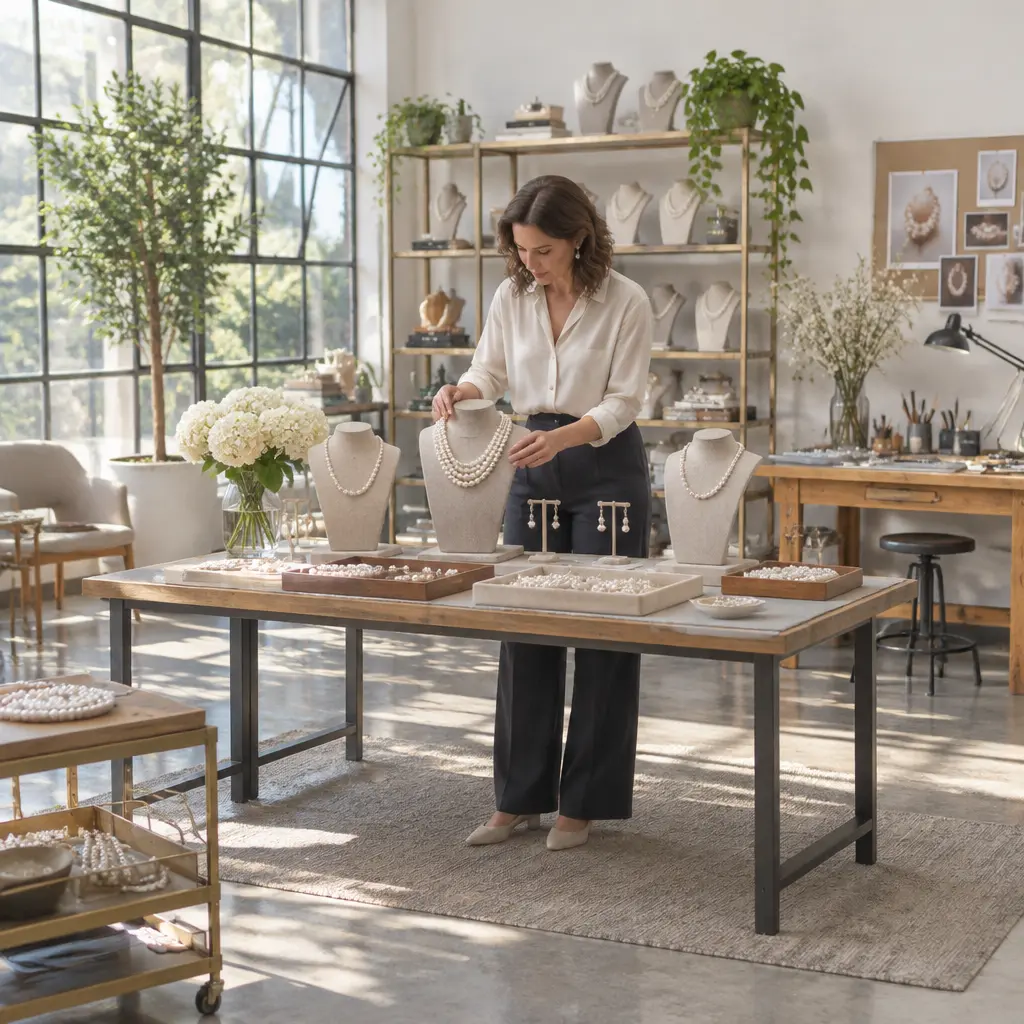
Celebrity styling influences not only whether pearls are fashionable, but also which forms feel current. The main categories include classic strands, baroque pearls, pearl earrings, layered necklaces, and pearls combined with metals or casual clothing. These are related but distinct trend expressions: one emphasizes continuity, another individuality, and others change scale or context.
Baroque pearls make irregularity a feature
Baroque pearls are pearls with irregular, non-spherical shapes. Their asymmetry makes each piece visually distinctive, which suits fashion coverage that rewards novelty and individual expression. GIA identifies shape as one of the factors used to describe pearls, alongside size, color, luster, and surface characteristics; irregular form is therefore a recognized quality category, not necessarily a defect.
When celebrities wear oversized or sculptural baroque designs, they can help frame natural variation as a design advantage. The result is a broader styling vocabulary: a pendant can be worn alone as a focal point, or an irregular strand can contrast with precise tailoring. The trend also reflects a wider consumer interest in pieces that look less uniform and more personal.
Layering and mixed materials make pearls more adaptable
Layering combines multiple necklaces or jewelry types, while mixed-material styling pairs pearls with chains, gold, silver, gemstones, or leather. Celebrity stylists use these approaches to move pearls between formal and everyday settings. A short pearl strand layered with a chain, for example, can appear less ceremonial than a single matched necklace.
This flexibility matters in a market where jewelry buying is influenced by both occasion and self-expression. The World Jewellery Confederation (CIBJO) publishes industry guidance on pearl terminology and classification, helping distinguish pearl types in trade and communication. Clear naming is useful as designs diversify, since consumers may encounter cultured, freshwater, saltwater, Akoya, South Sea, and Tahitian pearls under the broad label “pearls.”
Pearl earrings and single accents translate looks for everyday wear
Pearl studs, drops, and single-pearl accents are lower-commitment ways to echo a celebrity look. They require less styling than a statement necklace and can fit workwear or casual outfits. This makes them a practical bridge between editorial fashion and daily dress: consumers can adopt the material or motif without reproducing an entire red-carpet ensemble.
Retail and fashion coverage often present earrings as entry-level pearl pieces, but price depends on pearl type, size, luster, matching, setting, and brand. GIA’s consumer education materials emphasize evaluating pearls through multiple qualities rather than assuming that “pearl” describes one uniform product.
Social media and retail turn celebrity moments into measurable attention
Social platforms extend a celebrity jewelry appearance beyond its original event. Images can be reposted, annotated, and translated into shopping suggestions, while brands and retailers may offer similar silhouettes. This creates a chain from exposure to interest to possible purchase, but each step is different: views measure distribution, searches indicate curiosity, and sales require transaction data.
Engagement is evidence of attention, not proof of sales
A viral image, high engagement, or increased search interest can indicate that a look has captured attention. It cannot, by itself, establish that celebrity influence caused higher pearl sales. Sales may also respond to seasonal gifting, weddings, product launches, price changes, and broader fashion cycles. The U.S. Federal Trade Commission’s endorsement guidance likewise underscores the importance of transparency when a public figure has a material relationship with a brand.
For this reason, claims about celebrity-driven growth should be treated carefully unless a source provides a defined period, market, product category, and comparison method. Industry reports may track jewelry sales or consumer sentiment, but they do not always isolate pearls or identify celebrity exposure as the cause.
Brand partnerships convert visibility into product storytelling
A brand partnership is a formal arrangement in which a celebrity promotes, designs, or represents a jewelry label. Unlike an incidental appearance, a campaign can connect a specific look to a product name and retail channel. Its influence depends on the celebrity’s audience, the credibility of the partnership, the design’s availability, and whether the campaign communicates pearl type and quality clearly.
The FTC’s Endorsement Guides state that material connections between endorsers and advertisers should be disclosed so audiences can assess the message. For pearl shoppers, that disclosure is relevant alongside product information: cultured status, origin claims, treatment disclosures where applicable, and accurate descriptions of materials help separate marketing imagery from verifiable product characteristics.
Pearl trend longevity depends on quality, provenance, and informed buying
Celebrity influence can accelerate attention, but durable pearl trends also depend on wearability, craftsmanship, and trust. A trend may fade while a well-made piece remains useful for years. Buyers can make more informed choices by understanding pearl categories, comparing quality factors, and asking sellers for clear product descriptions.
Pearl education helps consumers compare styles and value
GIA’s pearl education describes important value characteristics such as luster, surface quality, shape, color, size, and matching. These characteristics help explain why two necklaces that look similar in a photograph may differ substantially in price and appearance. Consumers should also distinguish natural pearls from cultured pearls: cultured pearls form with human assistance, while the mollusk produces the nacre that creates the pearl.
A practical comparison can be shown in a simple chart: classic strands emphasize matching and versatility; baroque pieces emphasize sculptural shape; studs emphasize ease of wear; and layered designs emphasize styling flexibility. The chart should be read as a guide to design function, not a ranking of quality or investment value.
Responsible sourcing adds context to trend choices
Provenance and sourcing information matter because pearl jewelry involves aquaculture, processing, international trade, and retail claims. CIBJO’s industry references support consistent terminology, while the GIA offers consumer-facing guidance for identifying and describing pearls. Shoppers can ask about pearl type, country or region of origin when documented, treatments, metal content, and repair or care requirements rather than relying on a celebrity image as a proxy for quality.
Conclusion: celebrity influence makes pearl trends visible, but context makes them meaningful
Celebrity influence on pearl jewelry trends works through visibility, repetition, and reinterpretation. Red-carpet and royal appearances preserve classic associations, while gender-inclusive styling, baroque shapes, layering, and everyday pearl accents broaden the category. Social media and partnerships can carry a look toward shopping, but attention metrics are not proof of sales, and endorsement relationships should be transparent.
The broader implication is that celebrity fashion can shape how consumers imagine a material without determining its quality or value. To explore a trend responsibly, compare pearl characteristics, check product descriptions and sourcing claims, and treat viral styling as inspiration rather than buying advice. Further reading from GIA and CIBJO can help shoppers understand pearl terminology before making a purchase.
Sources: Gemological Institute of America, Pearl Description and Quality Factors, https://www.gia.edu/pearl-quality-factor; Gemological Institute of America, Pearl Buying Guide, https://www.gia.edu/pearl-buying-guide; World Jewellery Confederation (CIBJO), The Pearl Book, https://www.cibjo.org/blue-books/; Federal Trade Commission, Guides Concerning the Use of Endorsements and Testimonials in Advertising, https://www.ftc.gov/business-guidance/advertising-marketing/endorsements-influencers-reviews; Vogue, Harry Styles’s 2019 Met Gala Look, https://www.vogue.com/article/harry-styles-met-gala-2019