Pearls are organic gemstones made inside mollusks, prized for their luster, color, and rarity. They can be meaningful purchases and may retain value, but most pearls should be treated as luxury goods rather than dependable financial investments: resale prices can be far below retail, and there is no standardized exchange or guaranteed market. Buyers assessing pearls should distinguish natural from cultured, compare quality and provenance, understand pricing and resale limits, and account for care and insurance. Industry figures also show why context matters: the Gemological Institute of America (GIA) notes that natural pearls are rare, while cultured pearls make up most pearls sold today; rarity alone, however, does not guarantee a profitable return.
Pearl investment value depends on type, quality, and marketability
A pearl’s “investment value” is the amount a buyer might reasonably recover later, not simply its original retail price or appraised replacement value. The GIA describes pearls as organic gems formed when a mollusk deposits nacre around an irritant or implanted nucleus; cultured pearls are produced with human intervention, while natural pearls form without it. These categories—and a pearl’s quality, documentation, and likely resale audience—shape what it may be worth.
Pearl prices are not set through a transparent, centralized market comparable to publicly traded stocks. Jewelers, auction houses, private dealers, and online marketplaces may offer different prices, and retail markups, brand premiums, and transaction costs affect resale. The International Gem Society and GIA both emphasize that pearl value depends on several interacting quality factors rather than a single universal price scale.
Natural pearls: rare does not automatically mean profitable
Natural pearls form without deliberate human implantation and are uncommon in modern jewelry. Their rarity can make well-documented examples desirable to collectors, especially when they have exceptional luster, attractive shape, substantial size, and credible provenance. But a claim that a pearl is natural needs suitable gemological evidence: an appraisal or sales description alone may not establish origin, and the market for individual natural pearls is narrower than the market for mainstream cultured jewelry.
For a high-value natural pearl, buyers should seek an independent report from a respected gemological laboratory and obtain written details about identity, treatments, and any known history. A rare label without verification can add risk rather than value.
Cultured pearls: the mainstream market
Cultured pearls form after a person introduces a nucleus or mantle tissue into a mollusk, which then produces nacre. This is genuine pearl formation, not an imitation. GIA identifies freshwater and saltwater cultured pearls as important market categories; saltwater types include Akoya, Tahitian, and South Sea pearls. Each has different typical sizes, colors, production conditions, and consumer demand.
Because cultured pearls account for most contemporary pearl jewelry, they are generally easier to find and compare than natural pearls. That availability can support a healthy jewelry market, but it also means that many cultured pearls are not scarce enough to behave like collectible assets. A premium purchase should be justified by measurable quality and a specific buyer’s demand, not by the word “cultured” or a pearl’s country of origin alone.
Pearl quality determines desirability and resale prospects
For pearls, quality is commonly judged through luster, surface condition, shape, size, color, and nacre quality, with matching also important for strands. GIA’s consumer guidance uses these features to explain why two pearls of similar size can differ substantially in appearance and value. They are useful for evaluating a purchase, though they do not guarantee that a future buyer will pay a particular price.
Luster and surface condition
Luster describes the intensity and sharpness of light reflected from a pearl’s surface. Strong, crisp reflections usually make a pearl look more vivid and are generally more desirable than a dull or chalky appearance. Surface condition refers to visible blemishes, such as pits, spots, or cracks. Small imperfections are common, but prominent damage may reduce appeal and can affect durability.
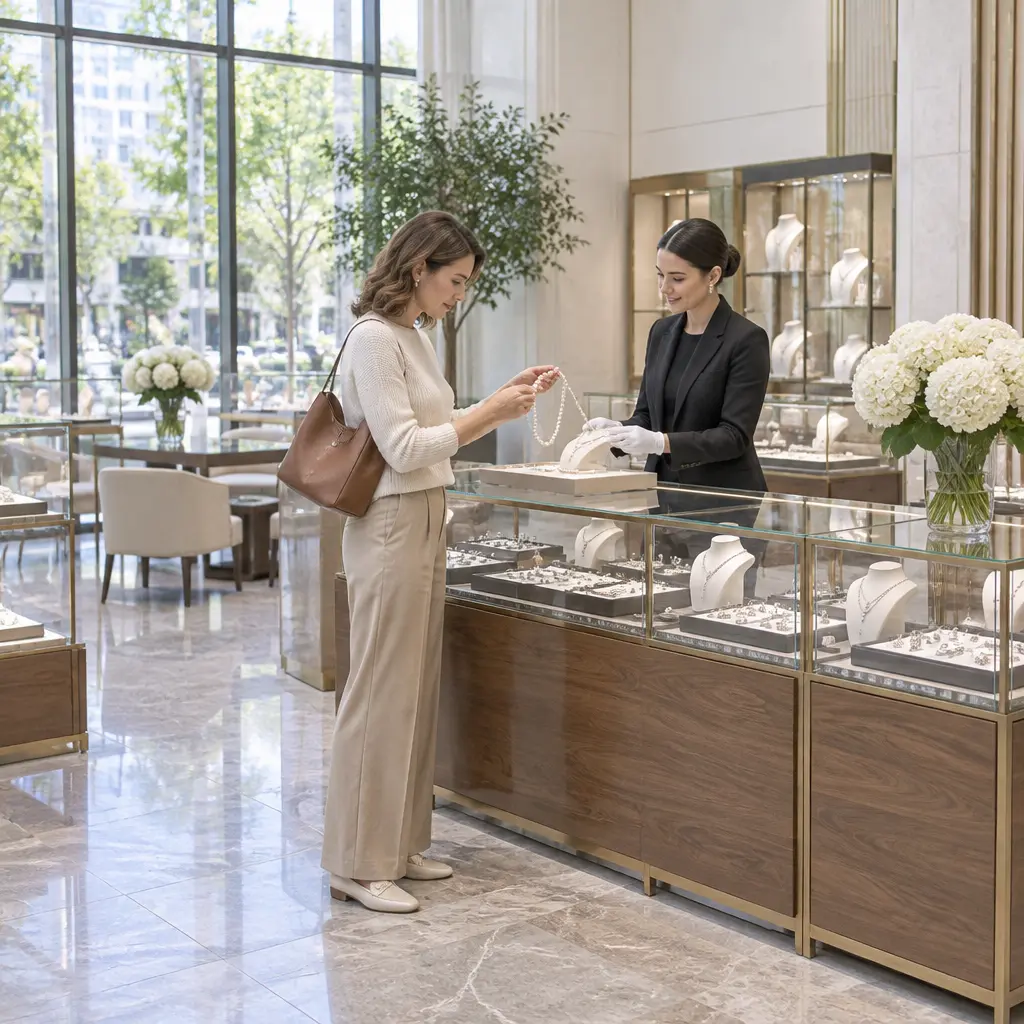
Buyers should view pearls under neutral lighting and inspect the entire piece, not just a photograph or the best-facing side. For a necklace, ask whether its pearls are well matched in luster, color, shape, and size; inconsistent matching can undermine the appearance of the strand.
Size, shape, color, and nacre
Larger pearls can command higher prices when other qualities are comparable, but size alone is not a reliable measure of value. Round pearls are traditionally popular, while baroque and other non-round shapes may appeal to buyers seeking distinctive designs. Color preferences differ by pearl type and fashion, so a fashionable hue is not necessarily a permanent source of premium resale value.
Nacre is the layered material deposited by the mollusk. Its quality affects a pearl’s appearance and, in some cases, how well its surface holds up. Ask the seller to disclose any treatments, coatings, or enhancements, and compare the pearl in person where possible. A precise description is more useful than vague claims such as “investment grade,” which do not by themselves establish a recognized grade or a guaranteed return.
Pearl pricing and resale create investment risks
A purchase price is not a forecast of resale value. Retail prices may include design, labor, branding, showroom costs, and retailer margins; a later buyer may value only the pearl and setting, or may prefer a different style. Appraisals written for insurance often estimate replacement cost, not what a dealer or auction buyer would pay. The American Gem Society advises consumers to understand the purpose of an appraisal and the distinction between appraisal value and market value.
Liquidity, fees, and price uncertainty
Liquidity is the ease of selling an asset promptly at a predictable price. Pearls can be less liquid than widely traded financial assets because resale depends on finding an interested buyer, verifying quality, and agreeing on condition and provenance. Auction commissions, dealer margins, shipping, insurance, and authentication may further reduce net proceeds.
There is no reliable universal annual return figure for pearls. Results vary by pearl type, quality, purchase terms, and sale channel, and historical auction results for exceptional pieces should not be treated as evidence that an ordinary retail purchase will appreciate. Buyers should calculate a conservative break-even price that includes all costs and assume that a sale could take time.
Supply, fashion, and environmental exposure
Pearl production relies on living mollusks and suitable aquatic conditions. Changes in water quality, temperature, disease, and local production can affect farms and supply, while shifts in fashion influence consumer demand. The Food and Agriculture Organization of the United Nations documents aquaculture’s dependence on environmental conditions, and pearl producers operate within that broader reality. These factors can affect availability, but they do not provide a simple way to predict pearl prices.
A buyer considering a pearl for long-term ownership should therefore distinguish environmental or cultural significance from financial performance. Responsible sourcing and transparent seller practices may matter greatly to the purchase, even when they cannot guarantee appreciation.
Buyers can reduce risk with verification and realistic expectations
Careful purchasing improves confidence in what a pearl is and what the buyer is paying for. It cannot eliminate market risk, but documentation, independent review, and a clear understanding of the seller’s return policy help prevent avoidable mistakes.
Check identity, treatments, and documentation
Ask whether the pearl is natural or cultured, identify its type and any known treatments, and request an itemized invoice describing the piece. For a high-value purchase, consider an independent gemological report from a recognized laboratory. Confirm that the report corresponds to the actual pearl or jewelry item, and keep receipts, reports, photographs, and provenance records together.
Be cautious when sellers use unsupported promises such as “guaranteed investment,” “will double in value,” or “investment grade.” These phrases are not substitutes for transparent grading, a credible resale market, and evidence of demand.
Compare prices and establish the purpose of the purchase
Compare similar pearls across reputable sellers, focusing on type, size, luster, surface, shape, matching, treatment disclosure, and setting. If the purpose is financial, ask prospective resellers or auction specialists what they might pay and what fees would apply before buying. If the purpose is personal enjoyment, choose a piece that fits the buyer’s taste and budget rather than relying on uncertain appreciation.
Plan for care, insurance, and eventual sale
Pearls are softer and more vulnerable to chemicals and abrasion than many mineral gemstones. GIA recommends gentle care, including avoiding contact with cosmetics and household chemicals and wiping pearls with a soft cloth after wearing. Store them separately from harder jewelry, and have strands checked periodically because thread can wear over time.
For an expensive piece, ask an insurer whether coverage is based on a current appraisal and what documentation is required. Before selling, obtain more than one offer where practical and compare the net proceeds after commissions and other costs. An insurance valuation should not be assumed to equal a sale price.
Conclusion: pearls are better treated as jewelry than guaranteed investments
Pearls can be valuable, collectible, and personally meaningful, but their investment potential depends on type, verified quality, documentation, demand, and the costs of resale. Natural pearls may be rare, cultured pearls dominate the ordinary market, and quality characteristics such as luster, surface, size, and matching influence desirability. Neither rarity nor a high retail appraisal guarantees a profit.
Buyers should verify what they are purchasing, compare like-for-like prices, understand the difference between replacement and resale values, and plan for care and selling costs. Treat a pearl as an investment only if the risk of uncertain returns and limited liquidity fits the buyer’s broader financial plan; otherwise, buy it for craftsmanship and enjoyment. For further guidance, consult independent gemological resources and obtain professional advice before making a high-value purchase.
Sources: Gemological Institute of America, “Pearl Quality Factors,” https://www.gia.edu/pearl-quality-factor; Gemological Institute of America, “Pearl Description,” https://www.gia.edu/pearl-description; Gemological Institute of America, “Pearl Care and Cleaning Guide,” https://www.gia.edu/pearl-care-cleaning; International Gem Society, “Pearl Value, Price, and Jewelry Information,” https://www.gemsociety.org/article/pearl-jewelry-and-gemstone-information/; American Gem Society, “Jewelry Appraisals,” https://www.americangemsociety.org/learn/jewelry-appraisals/; Food and Agriculture Organization of the United Nations, “The State of World Fisheries and Aquaculture,” https://www.fao.org/publications/sofia/