Pearl jewelry brings a soft sheen and polished detail to casual outfits, and it can be worn with everything from a T-shirt and jeans to a knit dress or relaxed linen shirt. The easiest approach is to balance the pearls’ luster with everyday fabrics, choose a scale that suits the outfit, and keep the rest of the accessories intentional. This guide explains how to select pearl styles, coordinate color and proportion, care for pearls, and build wearable combinations, drawing on gemological guidance from the Gemological Institute of America (GIA) and practical styling principles.
Pearl Styling Defines Casual Outfit Pairing
Pearl styling for casual outfits means choosing and arranging pearl jewelry so it complements informal clothing without making the look feel overly formal. The GIA describes pearls as organic gems formed within mollusks; unlike most gemstones, they are valued for their distinctive combination of luster, surface quality, shape, size, and color. That natural variety makes pearls adaptable: a simple stud can be subtle, while a strand or sculptural drop can become the focal point.
There is no single rule for casual pearl dressing. A useful starting point is contrast: pair the smooth, reflective surface of pearls with relaxed textures such as denim, cotton jersey, wool, or linen. The sections below cover necklace length and layering, earrings and bracelets, color and proportion, and care—four decisions that help pearls feel at home in everyday clothes.
Choose pearl jewelry by outfit formality
For a laid-back outfit, start with one small pearl detail: studs with a white T-shirt, a short pendant with a sweatshirt, or a single bracelet with rolled-up sleeves. To make the look more expressive, add a longer strand, irregular baroque pearls, or a modern metal setting. The contrast between a familiar outfit and a more noticeable piece keeps the styling relaxed rather than like a matching occasion set.
Use texture and proportion as styling tools
A fine pearl strand tends to read as delicate, while larger pearls or a closely spaced strand create more visual presence. Match that presence to the clothing: small pearls work well with lightweight tops, and bolder pieces can stand up to chunky knits, jackets, and oversized shirts. This is a styling guideline, not a fixed rule; neckline, personal taste, and the scale of the rest of the outfit all affect the result.
Necklace Length Shapes Pearl Jewelry Outfit Pairing
Necklace length describes where a necklace sits on the body and how it relates to a garment’s neckline. For casual styling, that relationship matters as much as the pearl itself. A necklace that follows the opening of a shirt or rests clearly above a crew neck is easier to see and less likely to compete with the clothing.
Short strands and pendants for everyday necklines
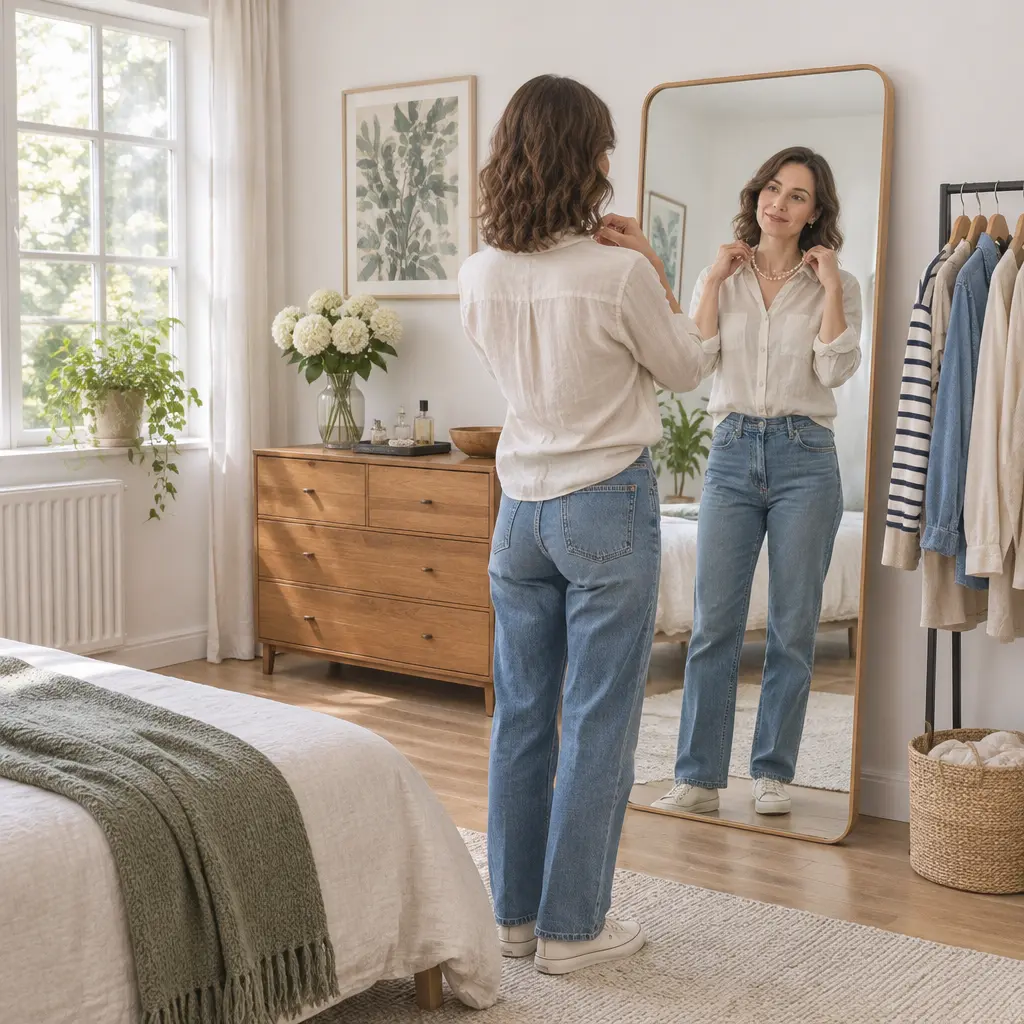
A short strand or single-pearl pendant suits crew-neck T-shirts, open collars, and simple knit tops. Against a plain shirt, a classic strand adds polish; with a printed or graphic tee, a small pendant often feels less crowded. For button-down shirts, wear the necklace inside the collar opening or let a short strand sit above the first open button, depending on the desired effect.
Long necklaces and layers for relaxed outfits
Longer pearl necklaces work particularly well with sweaters, tunics, and open-front layers because they create a vertical line. To layer pearls with a chain, vary the lengths so each piece remains visible, and keep one necklace simpler than the other. A long strand can also be doubled, but check that the strands sit comfortably and do not snag on knitwear or shirt fabric.
Neckline choice naturally leads to the next decision: whether to keep the rest of the jewelry quiet or use earrings and bracelets to echo the pearls.
Earrings and Bracelets Balance Pearl Jewelry Styling
Pearl earrings and bracelets are smaller-scale ways to introduce pearls into everyday dressing. They can complement a necklace or replace it, which is useful when a collar, scarf, or patterned top already draws attention near the neckline.
Pearl earrings for casual outfits
Studs are an easy choice for errands, work-from-home clothes, and casual weekends because they add a point of light without interrupting the outfit. Small hoops or short drops bring more movement and pair well with a simple top or a tucked-in shirt. If wearing a prominent necklace, choose understated earrings; if wearing no necklace, earrings can carry more of the look.
Bracelets and mixed-material combinations
A pearl bracelet can soften denim, a cotton shirt, or a relaxed dress. Pairing pearls with leather, cord, or a simple metal chain gives a strand a more informal feel, while stacking several pearl pieces creates a more deliberate statement. Keep comfort in mind: bracelets should move freely without catching on cuffs, and delicate pearls are better protected from repeated rubbing against hard bangles.
Color and Pearl Type Personalize Casual Outfit Pairing
Pearl color and form influence how jewelry coordinates with clothing. The GIA notes that pearl appearance is assessed through factors including color, luster, shape, size, and surface quality. In practical styling, these characteristics offer options ranging from understated and traditional to irregular and contemporary.
Match pearl color to clothing tones
White and cream pearls are versatile against denim, black, navy, and neutral basics. Pink, gray, or golden hues can complement warm or cool color palettes, but the most reliable test is to view the pearls beside the garment in natural light. For a low-contrast look, choose pearls close to the outfit’s tone; for a clearer accent, place lighter pearls against darker clothing or darker pearls against a pale top.
Use baroque and freshwater pearls for an informal feel
Baroque pearls have irregular shapes, while freshwater pearls are cultivated in freshwater mussels. Their variety can make them feel less uniform than a traditional round strand, which suits relaxed styling such as denim jackets, linen, and oversized shirts. A single irregular pearl pendant is an understated option; a strand of varied shapes makes a stronger focal point.
Pearl type is only part of the decision. Because pearls are organic and relatively sensitive to chemicals and abrasion, everyday styling should also include sensible care.
Pearl Care Protects Jewelry Worn with Casual Clothes
Pearl care means reducing exposure to substances and handling that can dull or damage the pearl’s surface. The GIA advises keeping pearls away from chemicals such as cosmetics, perfume, and household cleaners, and recommends gentle cleaning with a soft cloth. This matters for casual wear because jewelry is often put on and taken off around skincare, hair products, and daily activities.
Put pearls on last and remove them first
Apply perfume, lotion, sunscreen, and hair products before putting on pearl jewelry. Remove pearls before exercise, swimming, showering, or household cleaning, when sweat, water, chlorine, or cleaning products may be involved. After wearing them, wipe pearls gently with a clean, soft cloth before storing them.
Store pearls separately from harder jewelry
Store pearls in a soft pouch or a separate compartment so metal and harder gemstones do not scratch their surface. Avoid airtight storage for extended periods; pearls benefit from ordinary wear and ambient moisture rather than being kept in an overly dry environment. For a valuable or frequently worn strand, ask a qualified jeweler to check the clasp and stringing periodically.
Conclusion: Make Pearl Jewelry Part of Everyday Style
Pearls can work with casual outfits when their scale, color, and placement suit the clothing. Short necklaces and studs offer a subtle start; longer strands, mixed materials, and baroque shapes add a more distinctive note. Balance the jewelry with the neckline and fabric, then protect it by avoiding chemicals, wiping it after wear, and storing it separately. Try one pearl piece with a familiar outfit, notice how it changes the overall feel, and build from there.
Sources: Gemological Institute of America, “Pearl Quality Factors,” https://www.gia.edu/pearl-quality-factor; Gemological Institute of America, “Pearl Care and Cleaning Guide,” https://www.gia.edu/pearl-care-cleaning; Gemological Institute of America, “Pearl Description,” https://www.gia.edu/pearl-description