
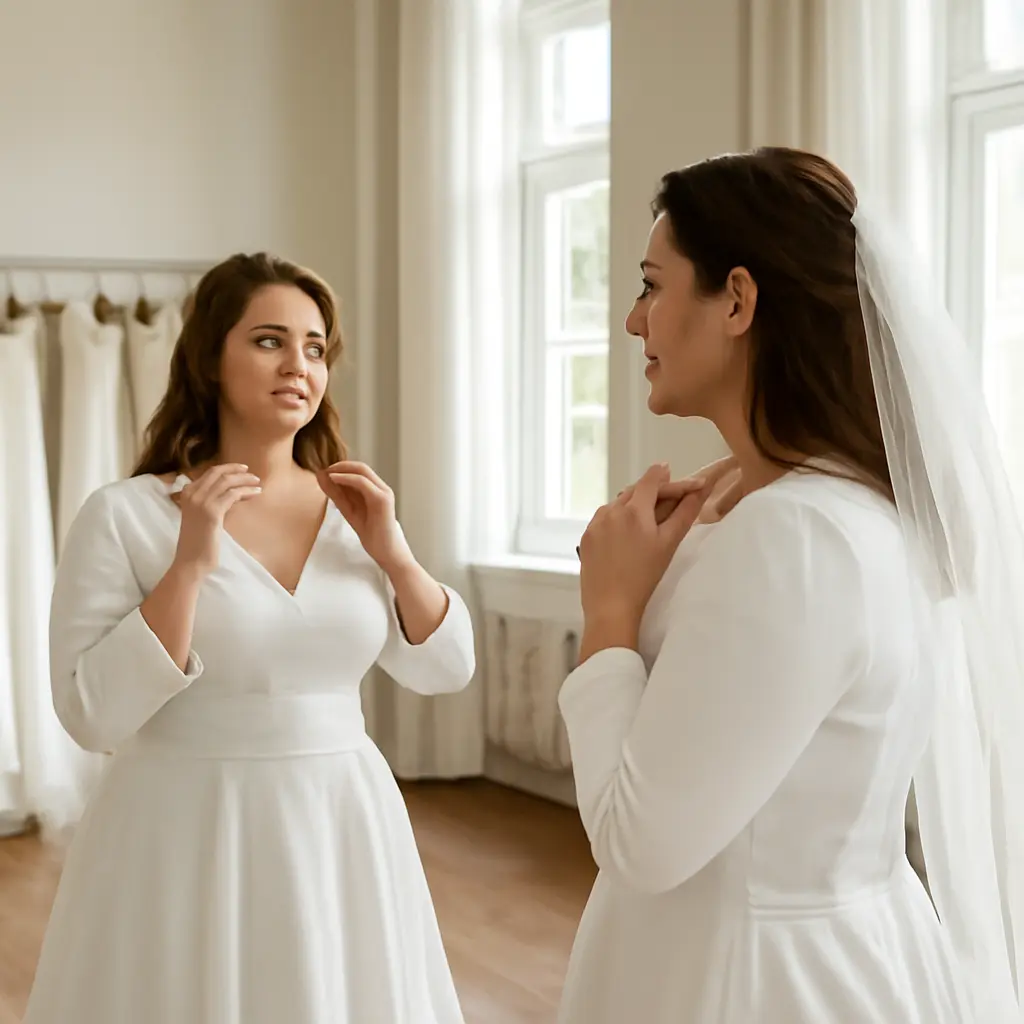
Vintage pearls and contemporary bridal style work together because pearls are adaptable: their soft luster brings history and romance to modern silhouettes without requiring a bride to dress head to toe in a vintage look. From heirloom studs with a minimalist gown to a dramatic pearl strand paired with a sleek suit, the combination can feel personal rather than old-fashioned. That flexibility matters in a large bridal market: The Knot’s 2024 Real Weddings Study reported an average U.S. wedding cost of $33,000 for weddings in 2023, while bridal jewelry offers a comparatively focused way to express individual style. The key is to balance pearl size, setting, color, and placement with the gown, neckline, and overall mood.
Vintage Pearls Complement Contemporary Bridal Style
“Vintage pearls” describes pearl jewelry made or styled in an earlier period, including inherited pieces, antique designs, and vintage-inspired accessories. “Contemporary bridal style” refers to current wedding fashion, often marked by clean lines, simplified silhouettes, unexpected materials, and personal styling. There is no single formal definition that governs these fashion terms; in practical styling, the pairing succeeds when the pearl’s texture and historical character add contrast to a modern outfit without competing with it.
Pearls have a long association with wedding adornment, but their current appeal is not limited to traditional strands. The Gemological Institute of America (GIA) explains that pearls form in mollusks and may be natural or cultured; their appearance varies by type, shape, size, color, and luster. Those variations make it possible to choose a piece that suits a range of bridal aesthetics—from restrained and architectural to romantic and maximalist.
Heirloom and Antique Pearls Add Personal Meaning
An heirloom is an object passed down through a family, while an antique generally refers to an item at least 100 years old under the U.S. Customs Service definition. A vintage pearl piece may be younger, inherited, or simply designed in an earlier style. These categories overlap, but they are not interchangeable: a newly made necklace can be vintage-inspired without being vintage, and a treasured family piece can be meaningful even if its age is unknown.
An inherited brooch, strand, or pair of earrings can make a bridal look specific to the wearer’s story. If the piece feels visually heavy beside a contemporary gown, wear it in a less expected way: pin a brooch to a bouquet wrap, attach it to a sash, or use a single earring as a charm on a modern bracelet. Before wearing an older piece, have a jeweler inspect its clasp, stringing, and settings, especially if it contains fragile or irregular pearls.
Pearl Types Offer Different Looks and Levels of Formality
Akoya, freshwater, South Sea, and Tahitian are common pearl categories, each with characteristic appearances rather than a fixed styling rule. Akoya pearls are often associated with round shapes and bright luster; freshwater pearls appear in a wide range of shapes and colors; South Sea pearls can be large and softly luminous; and Tahitian pearls are known for dark body colors. GIA notes that pearl value and appearance depend on multiple factors, including size, shape, color, luster, surface quality, and matching.
For a pared-back gown, a small, symmetrical pearl can keep the look polished. Baroque pearls—irregularly shaped pearls—bring an organic, modern edge to sculptural earrings or a simple pendant. Larger pearls can make a deliberate statement, especially when the rest of the jewelry is restrained. Treat these descriptions as styling options, not strict rules: the best choice depends on the wearer’s preferences, the garment, and the piece’s proportions.
Once pearl type and meaning are considered, the next question is how to integrate the jewelry with contemporary bridal shapes and materials.
Modern Bridal Styling Makes Vintage Pearls Feel Current
Modern bridal styling pairs traditional accessories with current cuts, materials, or ways of wearing them. For pearls, that may mean combining a vintage strand with a sharply tailored suit, wearing pearl drops with a minimalist slip dress, or balancing a pearl headpiece with an uncomplicated veil. The aim is not to disguise the jewelry’s age, but to make its contrast with the outfit look intentional.
Match Jewelry Scale to the Neckline and Silhouette
Scale is the relationship between an accessory’s visual size and the clothing around it. A high neckline may work better with earrings or a hair ornament than with a necklace, while a strapless or open neckline can leave room for a short strand. A strong collar, dramatic sleeve, or embellished bodice already draws attention; adding equally prominent pearls can make the overall look feel crowded.
A practical approach is to choose one focal point. Pair bold pearl earrings with a bare neckline, or let a necklace take the lead with small studs. For a contemporary suit or jumpsuit, a single vintage brooch can supply a concentrated point of texture. These are visual guidelines rather than rigid etiquette: try the full outfit together, including veil and hairstyle, because each changes how much jewelry is visible.
Balance Pearl Luster With Fabric and Other Metals
Luster is the quality of light reflected from a pearl’s surface and is one of the characteristics gemologists use to assess pearl appearance. Satin, crepe, lace, organza, and mikado each reflect light differently, so a pearl that looks subtle in daylight may appear more prominent under reception lighting. Try the jewelry with the actual dress fabric and in lighting similar to the ceremony or photographs.
Pearls can also be set with yellow gold, white gold, silver, platinum, or mixed metals. Matching every metal is not essential; repeating a metal tone elsewhere—for example, in a ring, hairpin, or shoe detail—can make mixed pieces feel coordinated. For a clean contemporary effect, keep the color palette limited and let the pearl’s natural sheen provide contrast.
Use Contemporary Placement for a Less Conventional Effect
Placement can modernize a traditional accessory as effectively as the accessory itself. A pearl strand worn at the back with an open-back gown, an asymmetrical earring combination, or pearls woven into a sleek hair arrangement can preserve their classic character while shifting the styling. A vintage brooch may also be worn on a belt, cape, or bouquet ribbon rather than at the lapel.
These approaches are particularly useful when an heirloom is not a natural match for the gown’s neckline or proportions. A stylist or jeweler can help adapt the piece without permanently changing it—for instance, by suggesting a removable clasp or a temporary attachment. Photograph the complete look from the front and back before the wedding to check that the jewelry reads clearly from different angles.
Care and Practical Choices Protect Bridal Pearls
Pearls are organic gems, so caring for them differs from caring for many harder gemstones. GIA describes pearls as relatively soft and vulnerable to scratching and damage from chemicals. Hair spray, perfume, cosmetics, and household cleaners can affect their surface or nacre, the layered material that gives many pearls their sheen.
Prepare and Store Pearls Carefully
Put pearls on after hair products, fragrance, and makeup have been applied, and remove them before changing out of the wedding outfit. After wearing, wipe them gently with a soft, clean cloth. Store them separately from harder jewelry to reduce the chance of scratches, and avoid sealing them in an excessively dry environment for long periods.
If a strand is old, inspect its thread and knots before the event. GIA notes that pearls are commonly strung with knots between them, which can help prevent pearls from rubbing together and reduce loss if a strand breaks. A professional jeweler can assess whether restringing is appropriate, particularly for a frequently worn or sentimental necklace.
Choose Natural, Cultured, or Imitation Pearls With Clear Expectations
Natural pearls form without human intervention, while cultured pearls grow after human involvement in the mollusk’s pearl-forming process. Imitation pearls are manufactured to resemble pearls and are not pearls in the gemological sense. The GIA distinguishes these categories and recommends reliable identification when the origin or nature of a pearl matters to a purchase.
For wedding styling, appearance, budget, provenance, and emotional meaning may all matter. A carefully chosen imitation piece can be an accessible option for a one-day accessory, while a cultured or inherited pearl may be preferred for long-term wear. Ask sellers to describe the material accurately, and consider an independent appraisal or gemological examination for a valuable purchase.
Conclusion: Make the Pearl-and-Modern Pairing Personal
Vintage pearls can complement contemporary bridal style through their history, varied forms, and distinctive luster. Heirloom meaning and pearl type help establish the character of a piece; neckline, scale, fabric, and placement determine how it works with a modern outfit; and careful handling helps protect it. There is no requirement to recreate a period look or follow a fixed set of rules. Choose one piece that feels meaningful or visually compelling, try it with the complete outfit, and consult a qualified jeweler if the pearl’s condition or identity is uncertain. The result can honor tradition while still looking unmistakably like the bride.
Sources: The Knot, The Knot Real Weddings Study, 2024, https://www.theknot.com/content/average-wedding-cost; Gemological Institute of America, “Pearl Quality Factors,” https://www.gia.edu/pearl-quality-factor; Gemological Institute of America, “Pearl Description,” https://www.gia.edu/pearl-description; Gemological Institute of America, “Pearl Care and Cleaning Guide,” https://www.gia.edu/pearl-care-cleaning; U.S. Customs and Border Protection, “Antiques,” https://www.cbp.gov/trade/basic-import-export/antiquities/antiques

